How to Choose a Custom Solid-Wood Steering Wheel
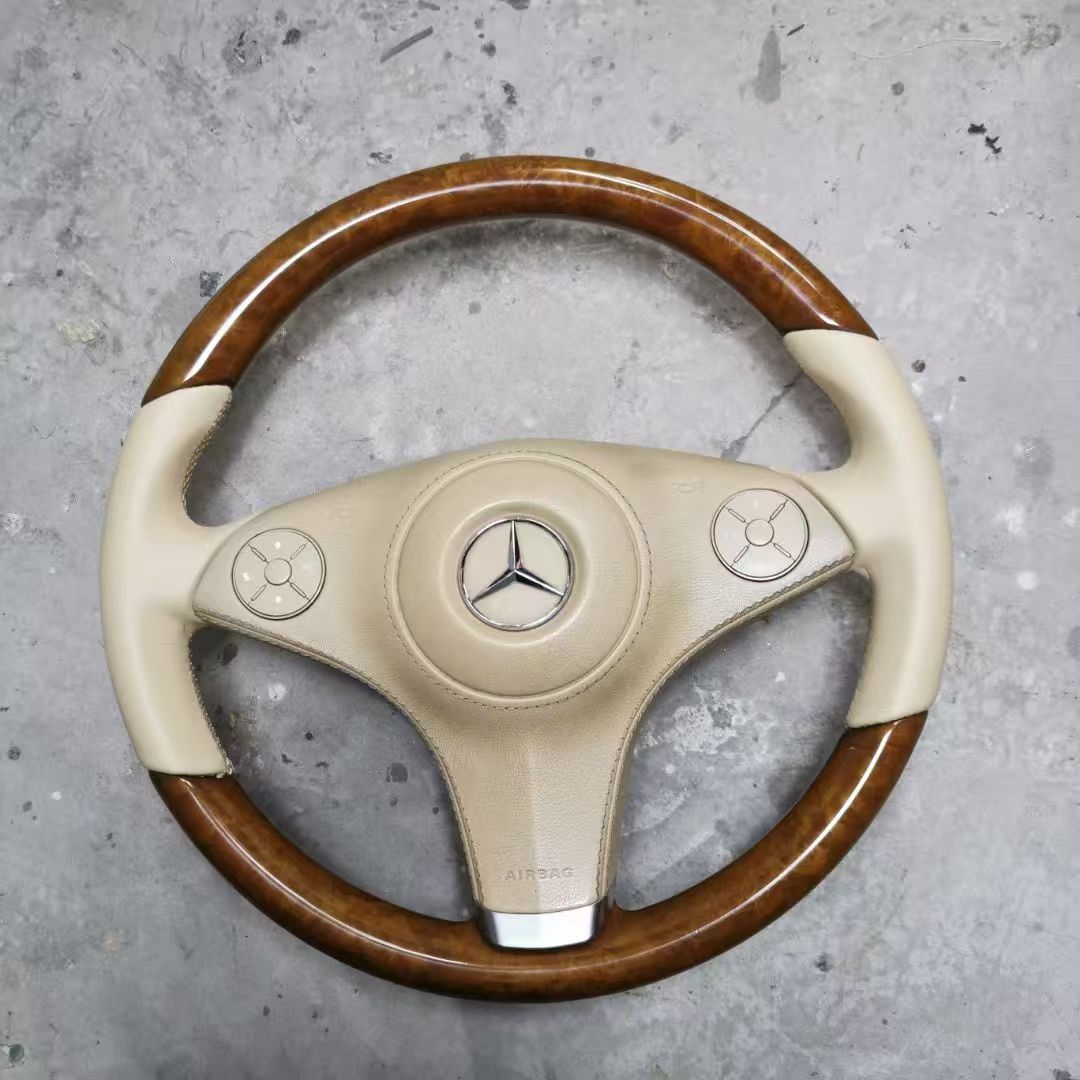
Understand the Craftsmanship, Key Challenges, and Real Quality Differences — All in One Article
When customers first encounter solid-wood steering wheels, their attention typically focuses on just two things:
- Does it look good?
- How much does it cost?
But what truly determines the value of a solid-wood steering wheel goes far beyond surface-level color and grain. It lies deeper—in:
- Structural design
- Wood selection
- Manufacturing craftsmanship
- Surface finishing
- Long-term dimensional stability
Steering wheels that appear similar at first glance may differ dramatically in actual construction.
Some products look stunning right after installation—but crack, warp, or lose their finish within two or three years. Others deliver not only premium aesthetics and substantial tactile feedback but also enduring reliability and stability—even after years of daily use.
This article breaks down, in clear and accessible terms:
- How solid-wood steering wheels are actually made
- Where the real technical challenges lie
- The fundamental differences between high- and low-quality products
1. Not All “Solid-Wood” Steering Wheels Are Made the Same Way
Many assume that if a steering wheel looks like wood, it must be solid-wood.
That’s not accurate.
From an industry perspective, “wood-look” steering wheels on the market generally fall into three categories:
1.1 Sleeve-Type Wood Trim Construction
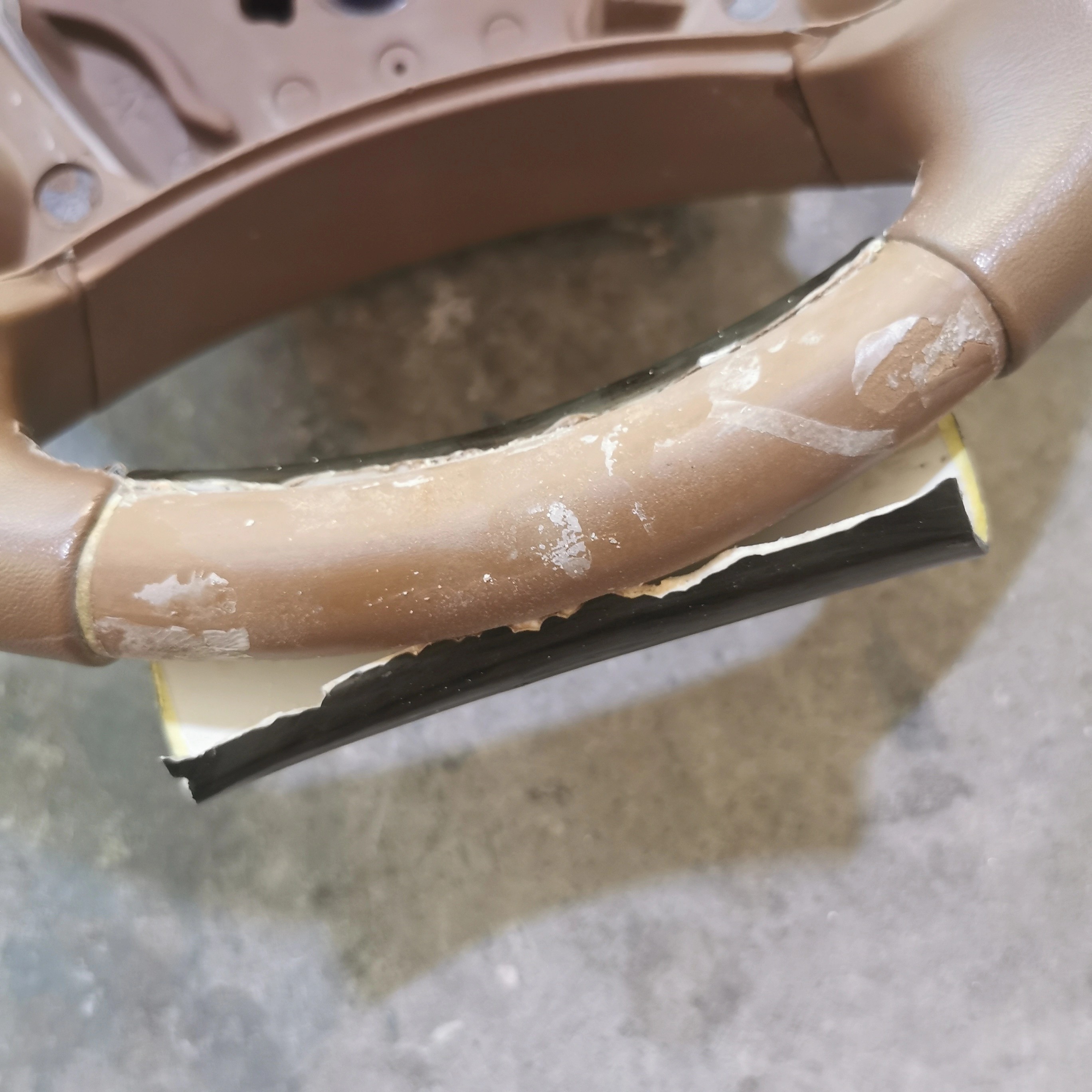
This method involves adding a thin layer of real wood veneer—or wood-effect material—onto an existing steering wheel structure, then bonding it and applying a topcoat.
Characteristics
- Relatively low production cost
- Fast manufacturing turnaround
- Delivers a convincing “wood aesthetic”
- Generally limited long-term stability
Common Issues
If materials, structural integration, or surface finishing are subpar, these products often develop problems over time:
- Cracking
- Warping
- Unstable seams
- Paint degradation
- Deteriorating tactile feel
1.2 Water Transfer Printing + Clear-Coat Spraying
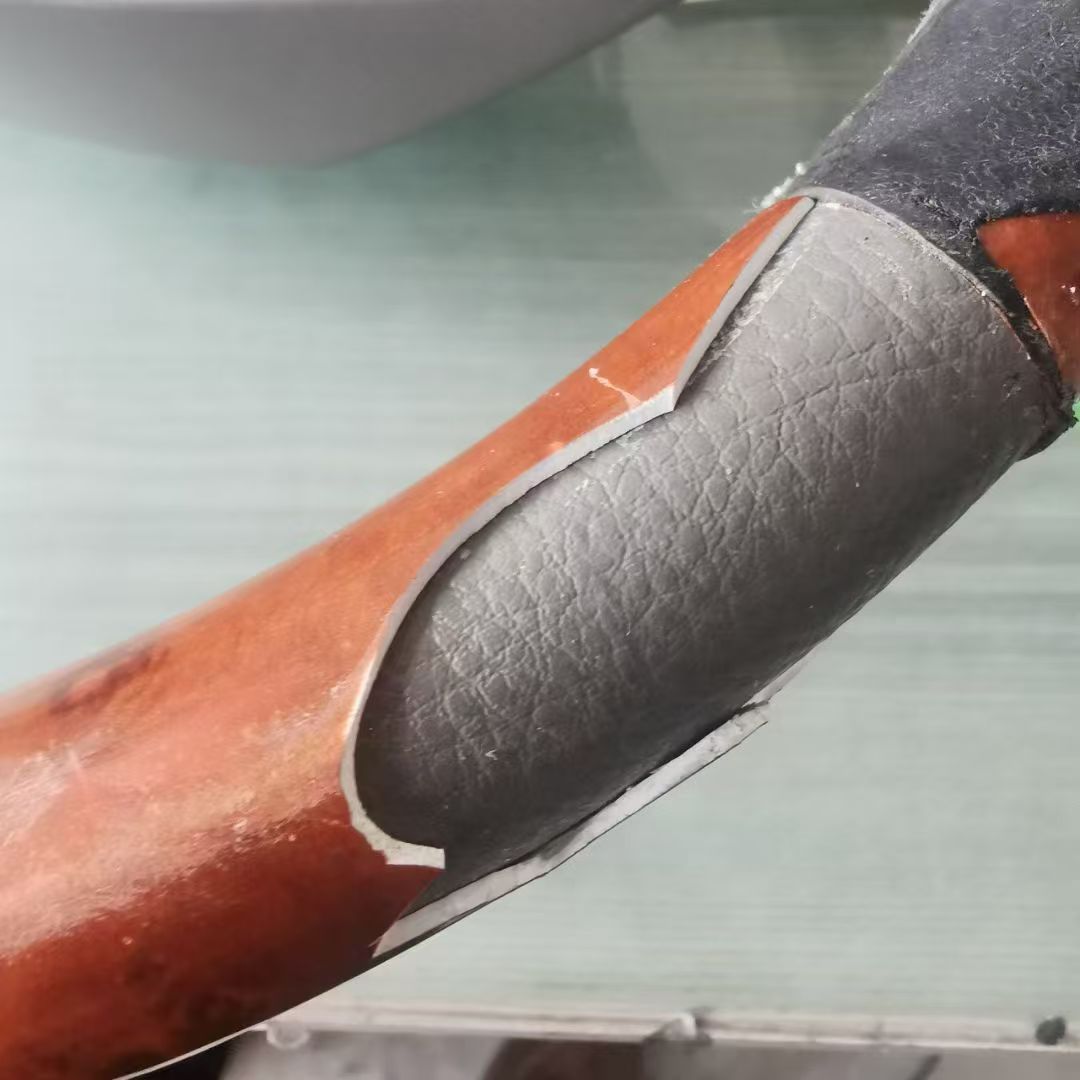
This is one of the most common “wood-grain imitation” techniques on the market.
It is not genuine solid wood. Instead, a wood-pattern film is applied via water transfer printing onto a substrate (e.g., plastic or composite), followed by a transparent clear coat.
Advantages
- Affordable pricing
- Wide variety of grain patterns available
- Visual appearance closely resembles real wood trim
Limitations
- Not natural wood—no inherent wood properties
- Tactile and visual quality falls short of authentic timber
- Performance heavily depends on substrate stability and paint durability
- Poor execution leads to significantly reduced longevity
1.3 Genuine Solid-Wood Structural Construction
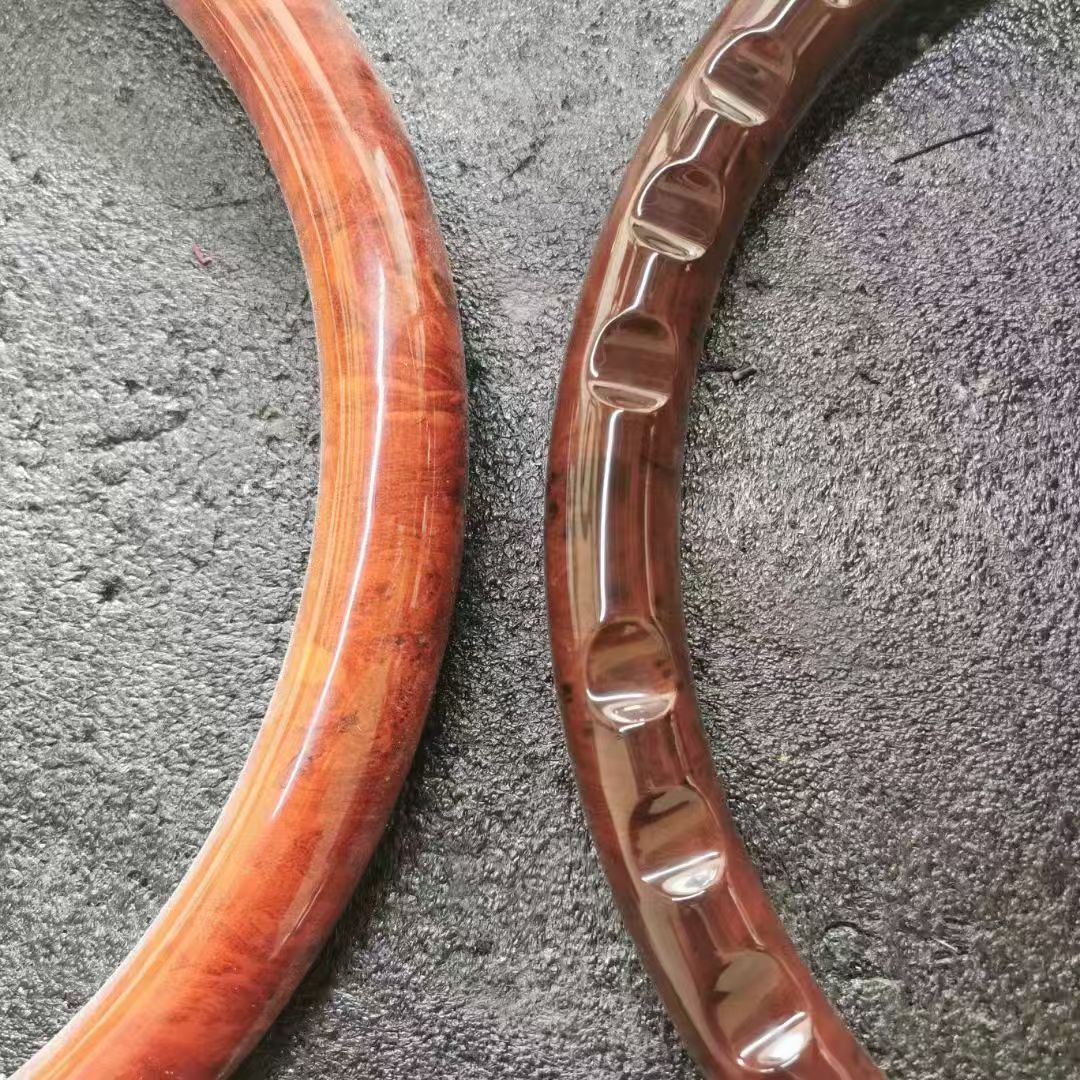
These steering wheels go far beyond “looking like wood.” They are engineered using real, natural timber, with full structural integration and comprehensive craftsmanship.
Core Process Steps
- Structural design
- Wood selection
- Shaping and forming
- Joinery and lamination
- Precision sanding
- Multi-layer finishing (sealing, staining, coating)
- Polishing
- Final assembly
This approach is the most technically demanding—requiring expertise in wood science, precision tooling, advanced finishing systems, and deep experience.
When executed well, the result surpasses imitation methods in every dimension: visual fidelity, tactile authenticity, and long-term stability.
2. Why a Custom Solid-Wood Steering Wheel Is Far More Than “Just Gluing on Wood”
Many customers assume making a steering wheel “wooden” simply means wrapping wood around it.
In reality, professional customization is vastly more complex.
2.1 Every Steering Wheel Structure Requires Unique Redesign
Steering wheels vary significantly across vehicle models in key aspects:
- Overall contour and profile
- Grip-zone curvature
- Underlying frame geometry
- Layout of control buttons
- Airbag integration zone
- Backside ergonomics (finger placement, thumb rests)
- Pre-planned space for heating elements, paddle shifters, or other electronics
This means no universal “one-size-fits-all” modification exists. Each application demands dedicated engineering.
2.2 Problems Caused by Poorly Executed Modifications
Without careful structural adaptation—and instead relying on arbitrary cutting, forced bonding, or superficial overlay—short-term usability may seem fine. But over time, issues inevitably emerge:
- Uneven stress distribution
- Weak or delaminating joints
- Visually unbalanced proportions
- Unnatural grip ergonomics
- Reduced service life
A truly excellent solid-wood steering wheel isn’t merely “made to look wooden.” It’s thoughtfully re-engineered—balancing aesthetics, structural integrity, and daily usability.
3. Wood Selection Defines Both Feel—and Long-Term Stability
A solid-wood steering wheel isn’t just “any piece of timber.” Wood selection is a discipline unto itself.
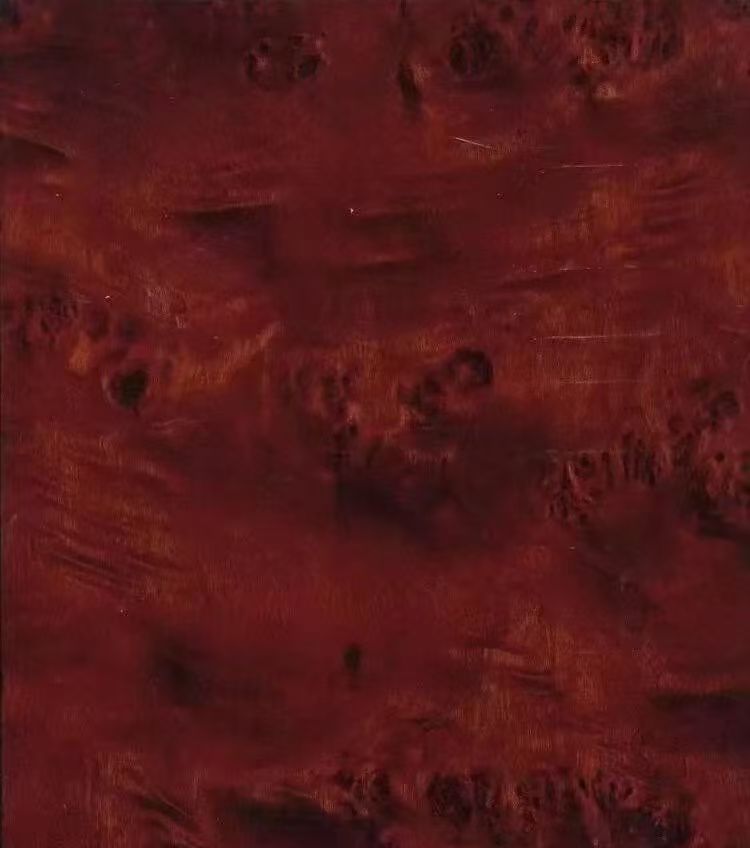

3.1 Common Woods Used for Steering Wheel Customization
- American Cherry
- North American Black Walnut
- Jin Si Nan Mu (Phoebe zhennan)
- Golden Silk Ebony (Diospyros spp.)
- Wutang Wood (Diospyros melanoxylon)
- Burmese Rosewood (Pterocarpus macrocarpus)
- Vietnamese Ironwood (Mesua ferrea)
- Indian Rosewood (Dalbergia sissoo / small-leaf rosewood variants)
3.2 Beyond Color: Critical Wood Properties
Differences among species extend well beyond hue—they include:
- Density
- Dimensional stability (resistance to warping/cracking)
- Natural oil content
- Grain character and figure
- Luster and depth of finish
- Machinability and workability
- Long-term durability under mechanical and environmental stress
Even within a single species—e.g., Black Walnut—grade variations significantly impact final appearance, color consistency, stability, and overall impression.
3.3 Why Premium Timber Matters
A steering wheel endures extreme conditions daily:
- Summer heat exposure (direct sunlight through windshield)
- Winter sub-zero cabin temperatures
- Repeated thermal cycling
- Contact with sweat, skin oils, and abrasion
- Constant mechanical loading during steering maneuvers
Low-grade wood—poorly dried, unstable, or improperly selected—will almost certainly fail under such stresses, exhibiting:
- Cracking
- Warping
- Surface instability
- Seam separation
- Degraded grip feel over time
For custom products, material choice is not an add-on—it’s the foundational determinant of lifespan and performance.
4. Most Common Failures in Low-Quality Solid-Wood Steering Wheels
Poorly made solid-wood steering wheels rarely fail immediately. Instead, flaws remain hidden—then manifest collectively after months or years of use.
4.1 Cracking
Cracking stems from multiple interrelated causes:
- Inferior wood quality
- Inadequate moisture-content control
- Insufficient wood stabilization (e.g., insufficient kiln-drying or acclimation)
- Flawed structural design (e.g., unsupported spans, improper grain orientation)
- Thin or incomplete surface protection
Under repeated automotive thermal cycles, substandard timber expands and contracts unevenly—eventually yielding visible fissures.
4.2 Warping
Poor wood selection or simplistic wrap-style construction leaves the wheel vulnerable to thermal expansion/contraction forces. Over time, localized distortion can occur—compromising both appearance and ergonomic integrity.
4.3 Subpar Finish: Low Protection & Diminished Aesthetics
Some products feature a glossy surface—but it’s often just a thin layer of basic lacquer.
Initially “shiny,” this finish quickly degrades to reveal:
- Surface oxidation and dulling
- Loss of depth and clarity
- Visible micro-cracks (“crazing”)
- Poor scratch resistance
True quality isn’t judged by initial shine—but by finish thickness, translucency, layering, and long-term resilience.
5. Is Water Transfer Printing Worth Buying?
Customers frequently ask:
“Is water transfer printing inherently inferior?”
The answer is nuanced—not the technique, but how it’s implemented, matters most.
5.1 Low-End Execution: Budget-Focused Cosmetic Approach
Most mass-market offerings follow a simplified process:
- Direct application onto original plastic/rubber surfaces
- Minimal or non-standard preparation of OEM leather layers
- Overlay of printed film or synthetic veneer
- Thin final clear-coat spray
Though visually acceptable initially, the underlying structure remains unoptimized. Mismatched coefficients of thermal expansion between dissimilar materials lead to poor long-term stability—especially under harsh interior temperature swings.
After repeated summer heatwaves and winter cold snaps, symptoms commonly include:
- Surface cracking
- Edge lifting or curling
- Paint instability
- Distortion
- Lack of rich, layered depth
5.2 High-Standard Execution: OEM-Inspired Structural Integration
Premium implementations go far beyond “stick-and-spray.” They begin with complete structural rework.
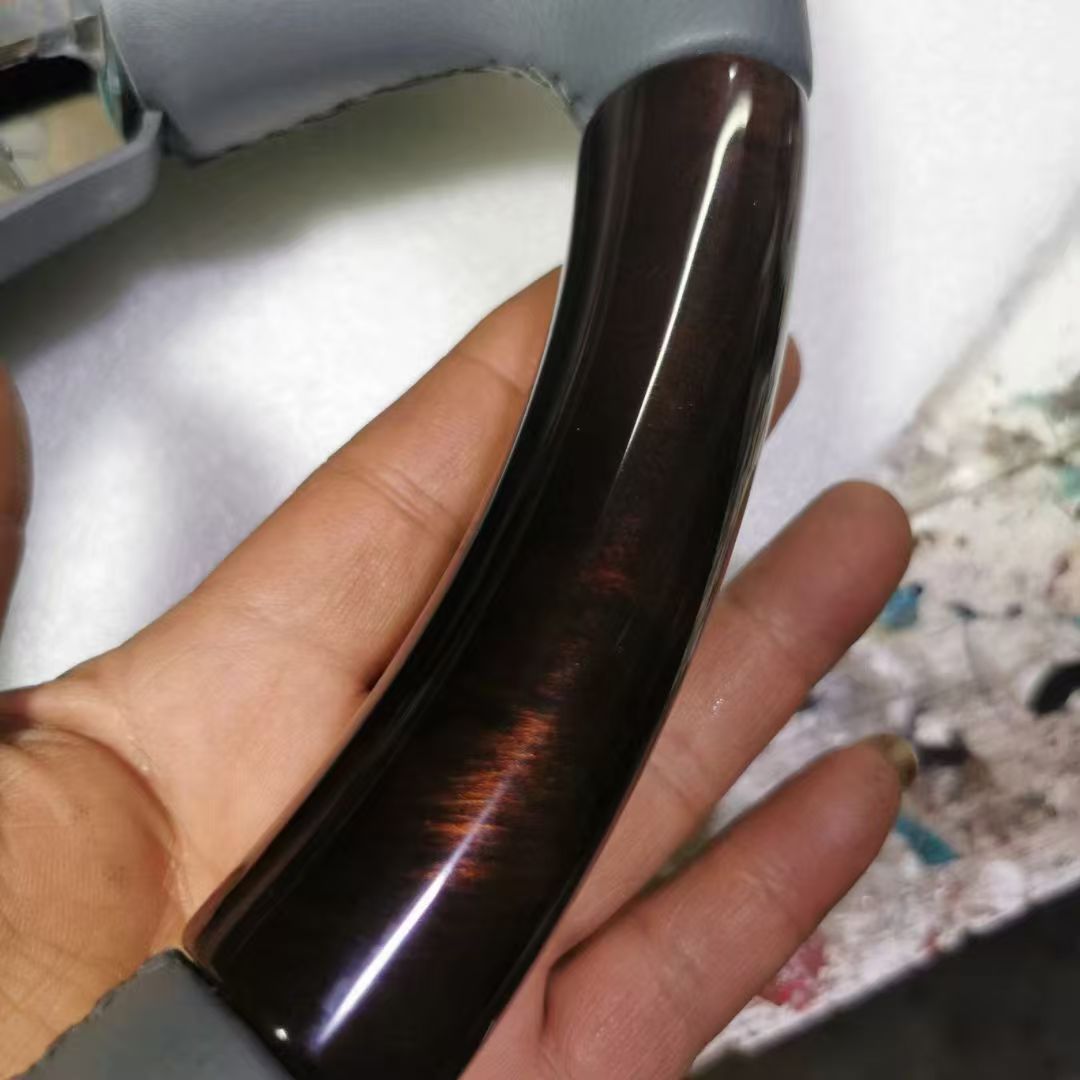
Typical High-Standard Practices Include:
- Thorough, standardized removal and preparation of original outer layers
- Reconstruction of precise ergonomic contours
- Secure, mechanically integrated bonding of upper/lower wood sections
- Rigorous attention to line continuity, proportion, transition zones, and grip ergonomics
- Application of high-specification surface finishes (e.g., imported UV-cured polyurethane) with controlled thickness, polishing, and curing protocols
When executed to this standard, results rival factory-installed luxury wood trims in visual richness, depth, and tactile sophistication.
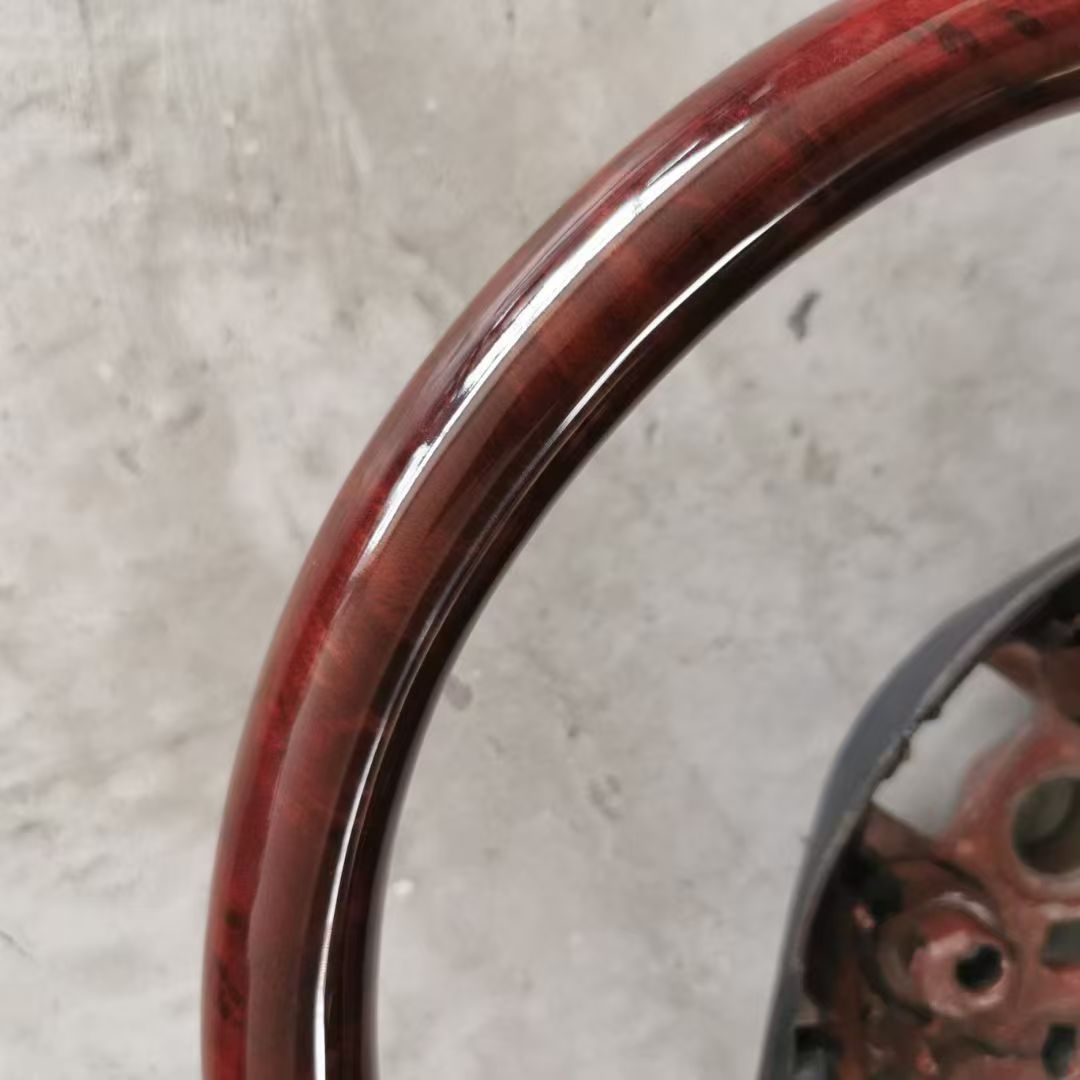
High-Standard Finish Characteristics:
- Deep, multi-dimensional gloss
- Exceptional clarity and translucency
- Rich visual layering
- Substantial, satisfying hand-feel
- Proven long-term stability
To the customer, the distinction isn’t about “water transfer” as a label—it’s whether the product delivers cosmetic appeal… or true quality assurance.
6. Why Truly High-Grade Mahogany Steering Wheels Are Rare
“Mahogany steering wheel” is a familiar phrase—but genuinely premium mahogany wheels are scarce.
The reason is simple:
Authentic mahogany craftsmanship isn’t just about the wood—it’s about an entire integrated system.
6.1 What High-Standard Mahogany Craftsmanship Entails
It requires mastery across:
- Rigorous wood grading and selection
- Advanced stabilization processes (kiln drying, humidity acclimation)
- Precision structural design
- Specialized forming equipment
- Comprehensive surface-finishing protocols
- Years—even decades—of accumulated artisan expertise
Many “mahogany-look” wheels on the market mimic only the surface pattern—not the material grade, structural methodology, or finish architecture.
Products achieving near-OEM luxury-vehicle wood-trim quality demand extensive R&D investment and generational craft refinement.
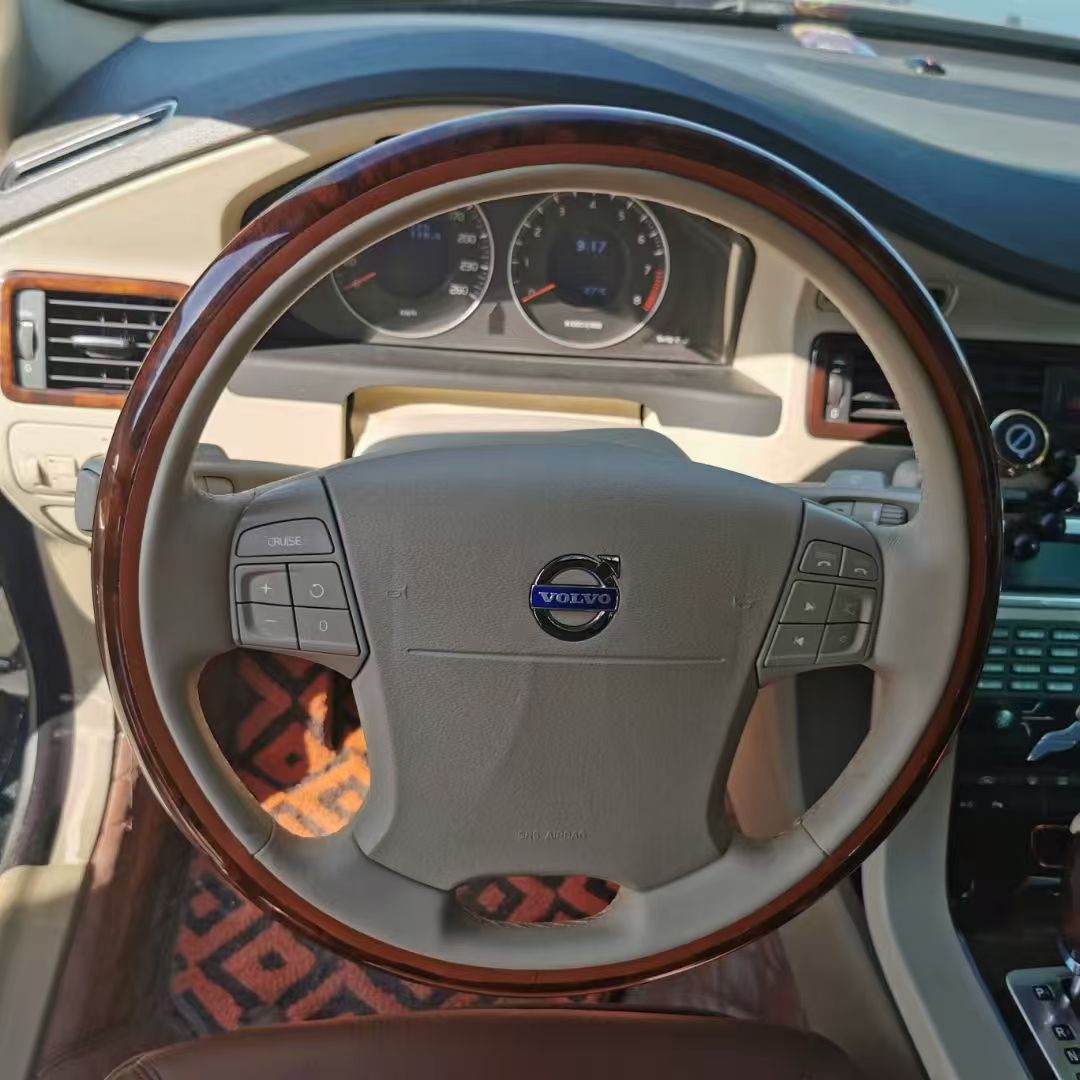
This isn’t solved by “knowing how to sand or spray paint.” It’s built on systemic mastery.
7. What Makes a High-Quality Solid-Wood Steering Wheel Exceptional
A truly outstanding solid-wood steering wheel excels holistically—not just in one attribute, but across all dimensions.
7.1 Visual Excellence
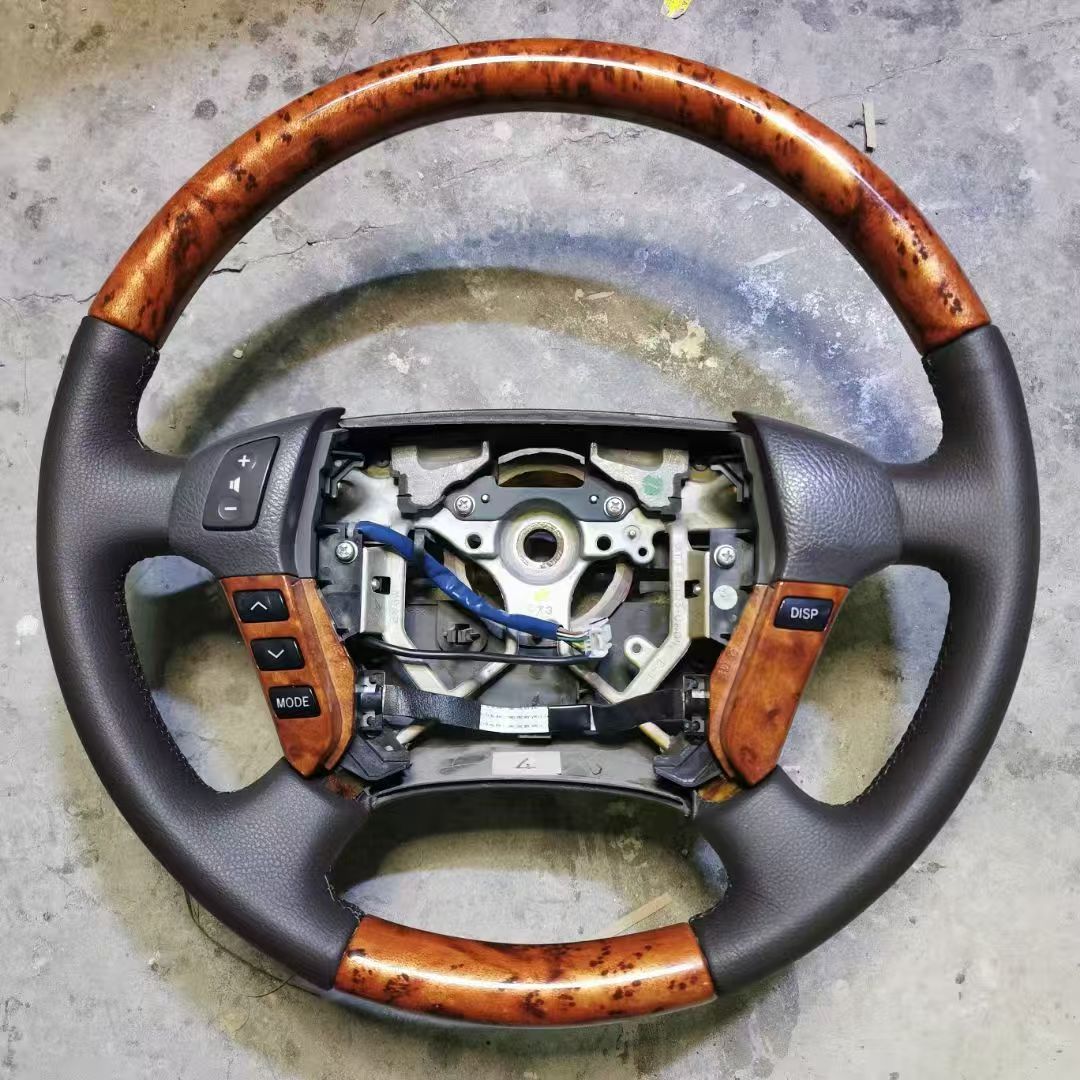
- Natural, expressive grain
- Smooth, uninterrupted contours
- Harmonious transitions between zones
- Rich, deep, translucent gloss
- Overall sense of refined luxury
7.2 Tactile Excellence
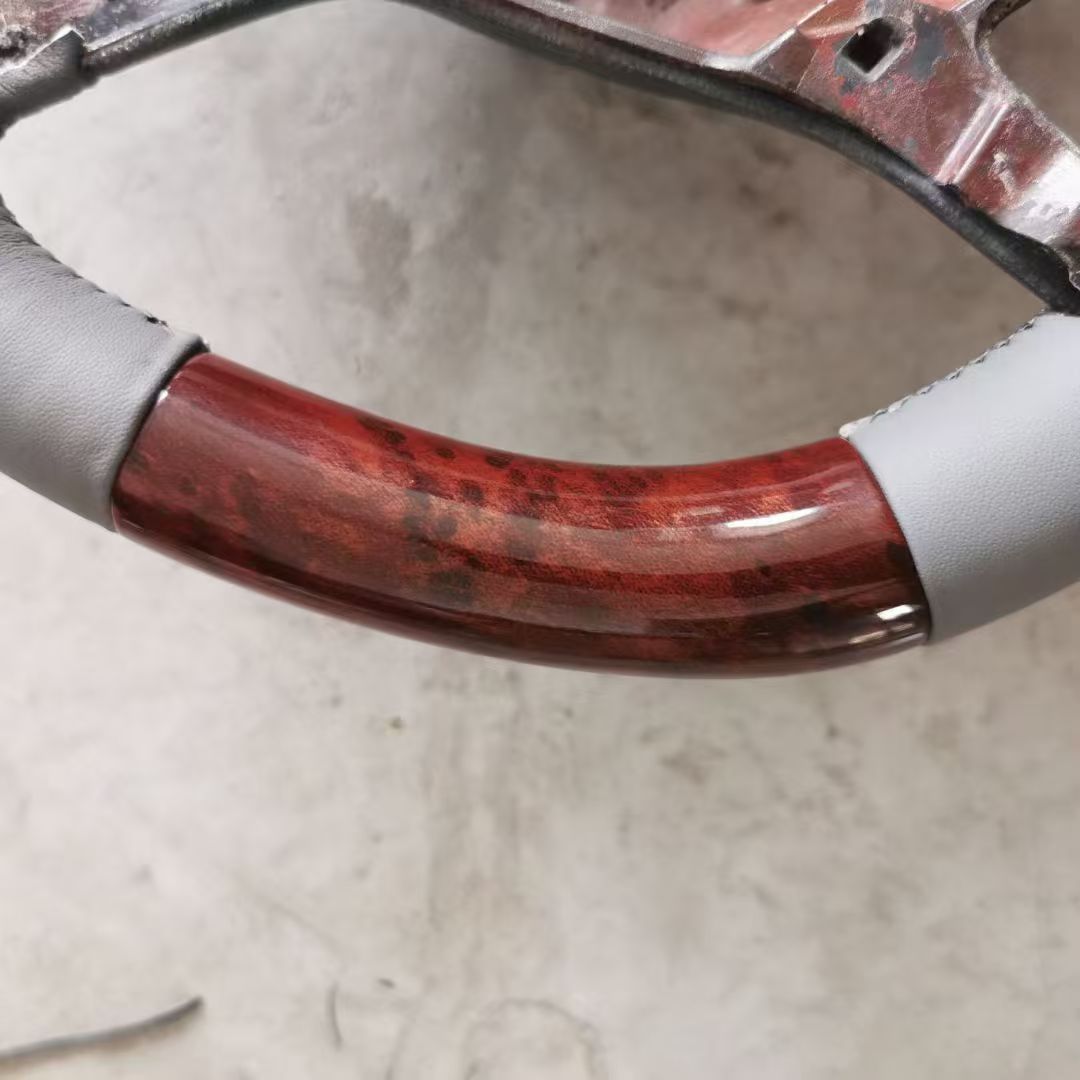
- Full, ergonomic grip zone
- Dense, reassuring weight and solidity
- Warm, organic texture—never plasticky or hollow
7.3 Structural Excellence
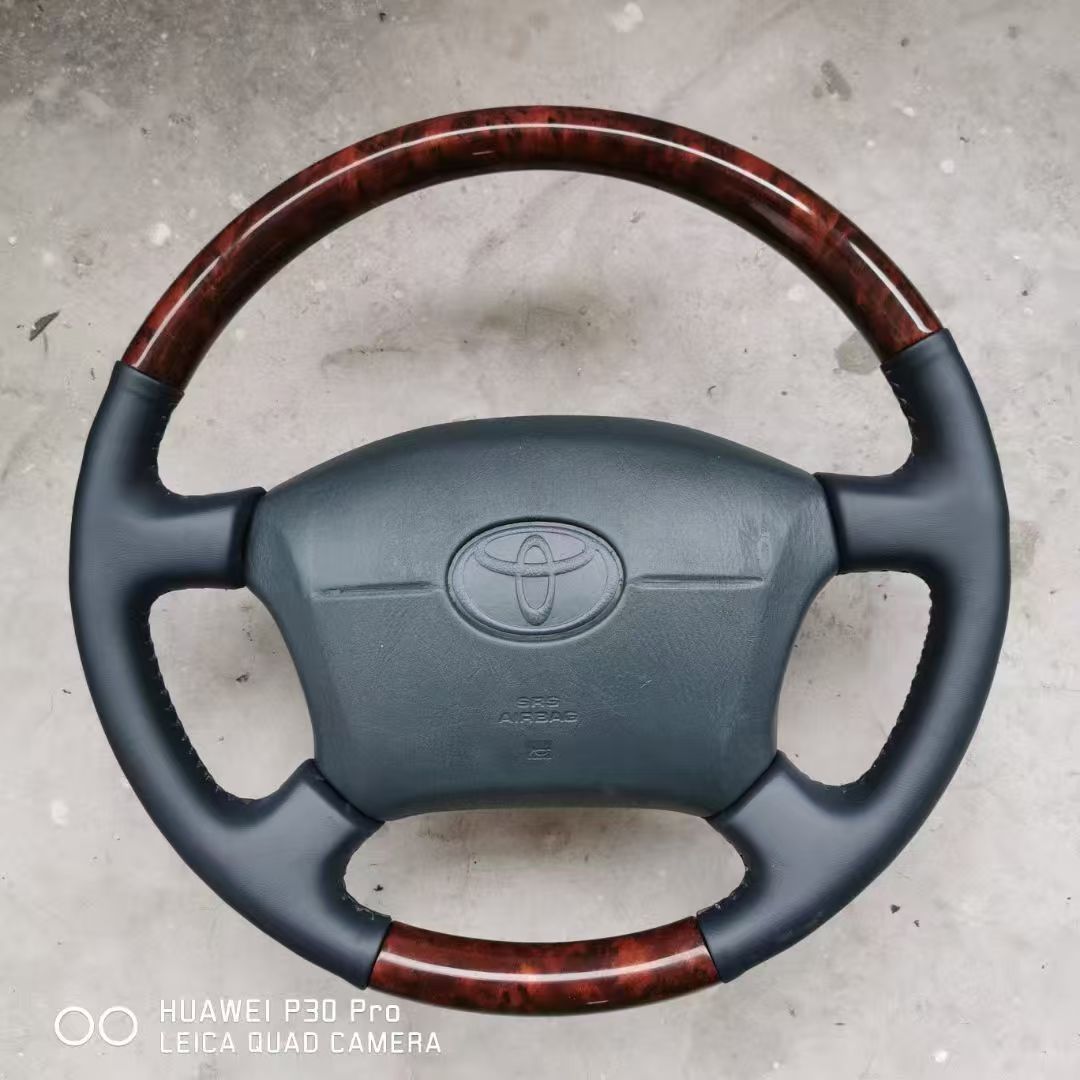
- Thoughtful, purpose-built design
- Precise fitment with original wheel architecture
- Robust, fatigue-resistant joint integrity
- Confidence-inspiring long-term reliability
7.4 Durability Excellence
- Superior resistance to daily wear and tear
- Stable performance across wide interior temperature ranges
- Immunity to premature cracking, warping, or finish failure
With truly premium wheels, users don’t just think, “It still looks nice.” They realize:
“It has remained consistently stable—and the craftsmanship gap only widens with time.”
8. Why Pricing Varies So Widely Among Custom Solid-Wood Steering Wheels
Customers often see dramatic price differences across vendors—and wonder why.
Fundamentally, variation arises from two primary factors:
8.1 Structural Complexity
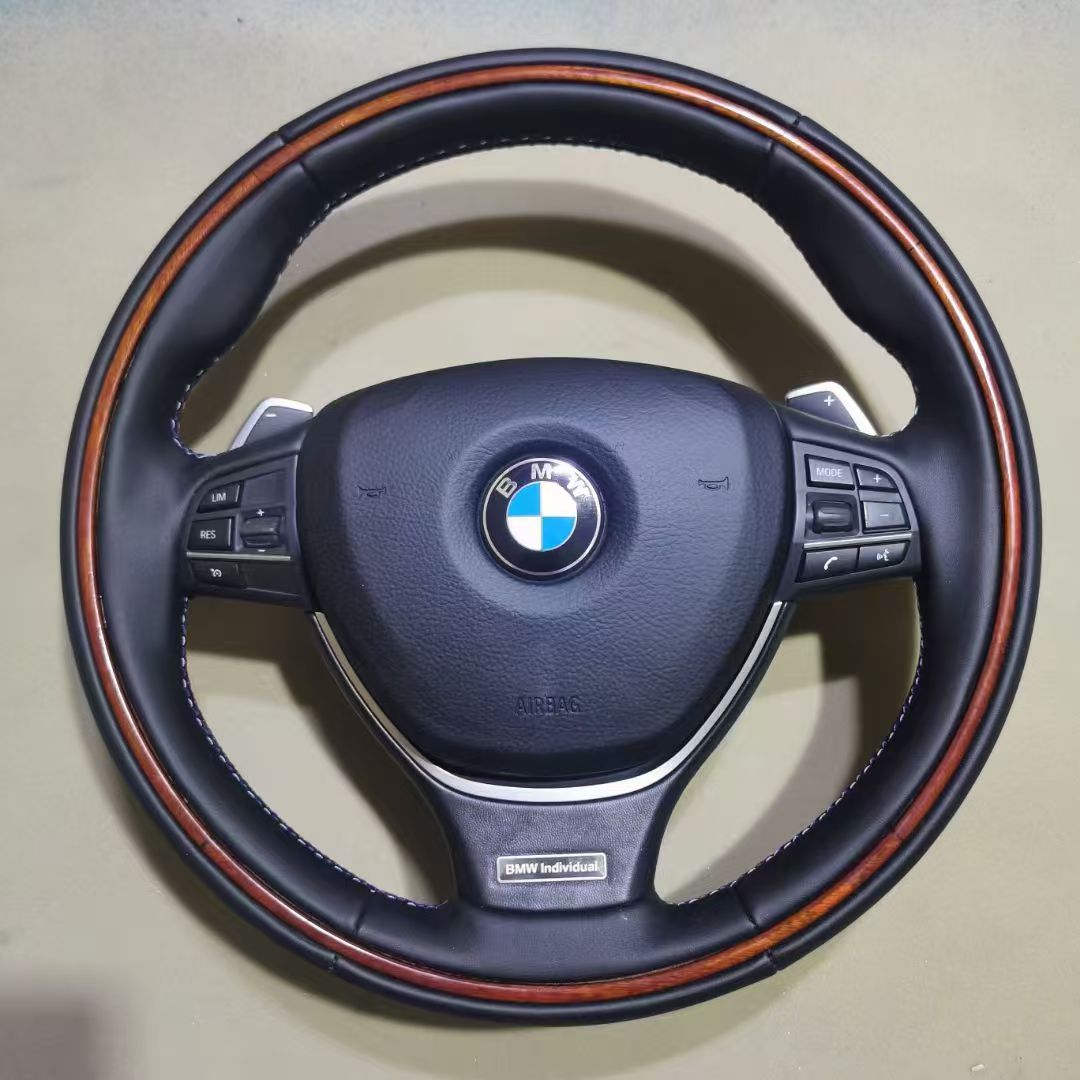
Greater complexity directly increases difficulty—and cost. Examples include:
- Non-standard grip profiles
- Integrated multifunction button zones
- Built-in heating element accommodations
- Paddle shifter cutouts and reinforcement
- Unique silhouette requirements
- Highly intricate OEM base structures
Each adds significant design, machining, and assembly effort.
8.2 Material Grade
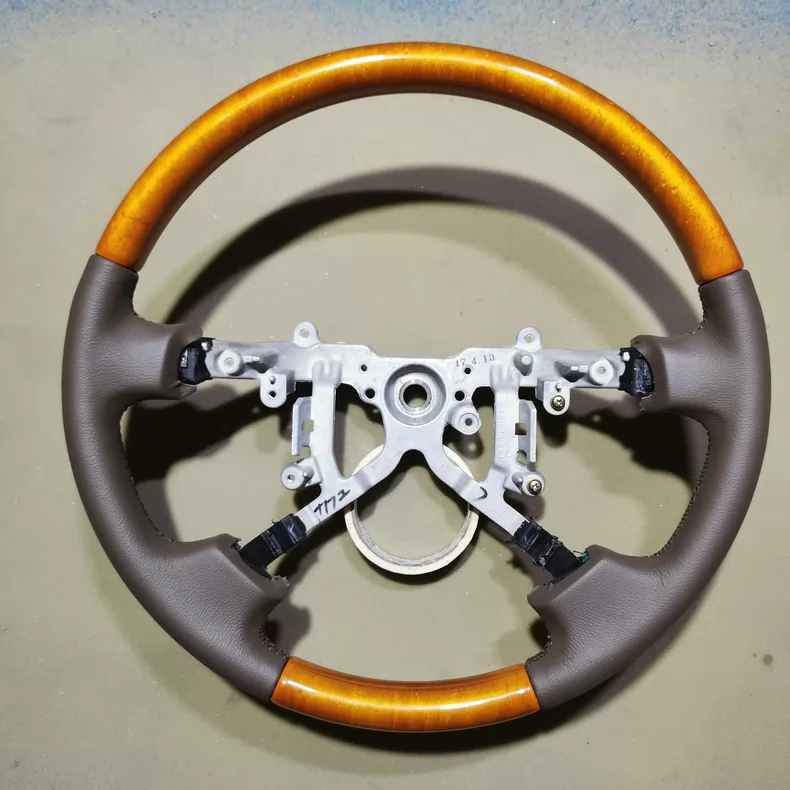
Rarer, denser, more stable, and more beautifully figured woods command higher prices due to scarcity and greater processing difficulty.
Two “solid-wood” wheels—one made from standard-grade cherry, another from premium-grade Black Walnut—will differ markedly in visual presence, hand-feel, and long-term behavior.
In short:
Higher structural complexity = higher cost Higher material grade = higher cost Higher process standards = higher cost
This isn’t “overcharging”—it reflects fundamental, tangible differences in product tier.
9. How Customers Can Evaluate Whether a Solid-Wood Steering Wheel Is Worth Buying
If you’re considering a custom solid-wood steering wheel, avoid judging solely on a single photo—or price alone. Instead, ask these critical questions:
9.1 Material Transparency
- Is it genuine wood—or a simulated surface?
- Which specific species is used?
- Is wood grade, origin, and drying history disclosed?
9.2 Structural Integrity
- Is it a simple overlay—or fully redesigned and structurally formed?
- Has the OEM wheel geometry been analyzed and adapted accordingly?
9.3 Surface Finishing Quality
- Is it a thin, generic lacquer—or a thick, engineered, high-performance clear coat?
- Does the finish convey depth, clarity, and layered richness?
9.4 Detail Refinement
- Are seams seamless and invisible?
- Are lines fluid and precisely executed?
- Is overall proportion balanced and harmonious?
- Is the grip zone ergonomically optimized—not just aesthetically shaped?
9.5 Long-Term Reliability Evidence
- Is cracking or warping likely under thermal cycling?
- Are there documented process standards—and a meaningful warranty framework?
The wheel worth buying isn’t the one that photographs best—it’s the one that remains beautiful, functional, and reassuringly solid—year after year.
10. Conclusion: The Value of a Solid-Wood Steering Wheel Lies Not in “Looking Like Wood”—But in “Standing the Test of Time”
Custom solid-wood steering wheels are never just cosmetic upgrades.
They represent a convergence of:
- Material science
- Structural engineering
- Master craftsmanship
- Generational experience
- Refined aesthetic judgment
Budget products aim only to imitate. Premium products strive to embody.
The former relies on short-term visual impact. The latter reveals its worth steadily—with every mile, every season, every year.
For customers, understanding these distinctions isn’t about spending more—it’s about spending more wisely and with confidence.
Because a truly exceptional solid-wood steering wheel delivers more than enhanced visuals. It delivers daily tactile satisfaction, unwavering reliability, and lasting pride of ownership.
When you begin evaluating based on material, structure, and process—not just images and price—you’ve already understood what a solid-wood steering wheel truly is.
- Structural design
- Wood selection
- Cracking
- Warping