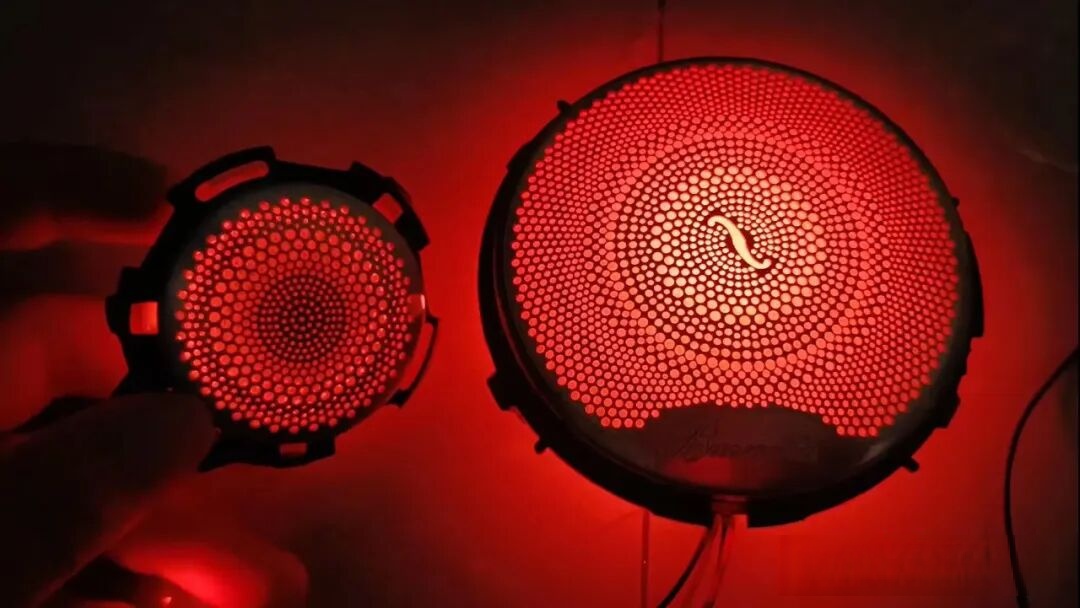
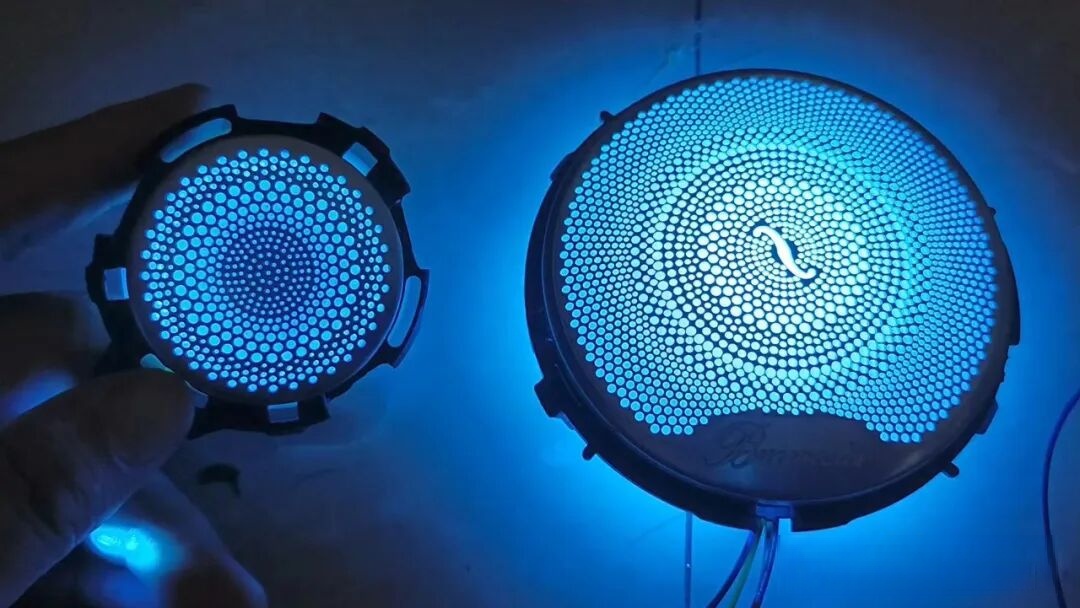
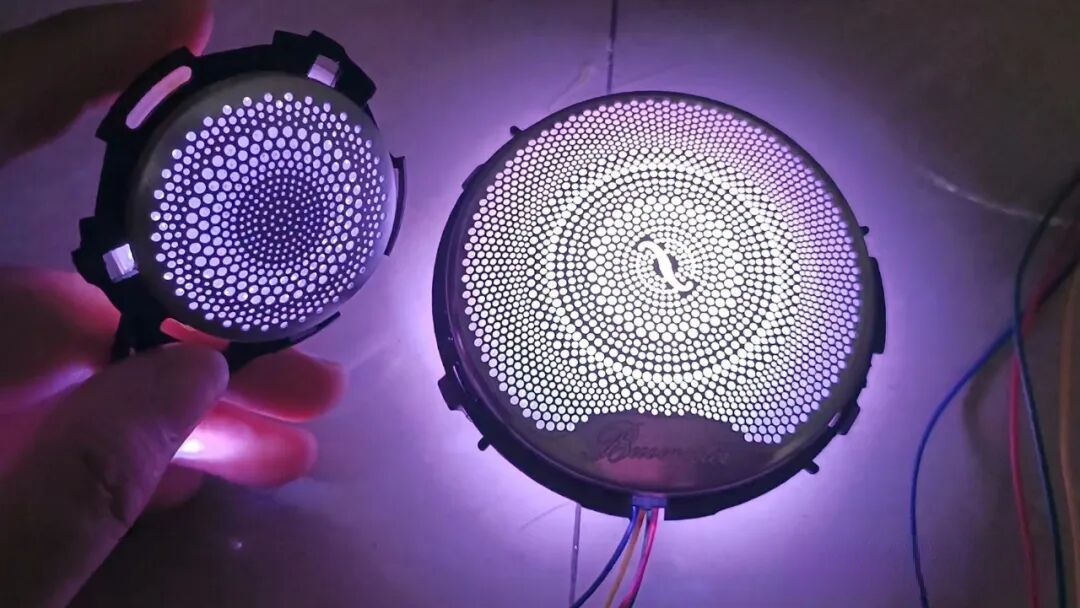
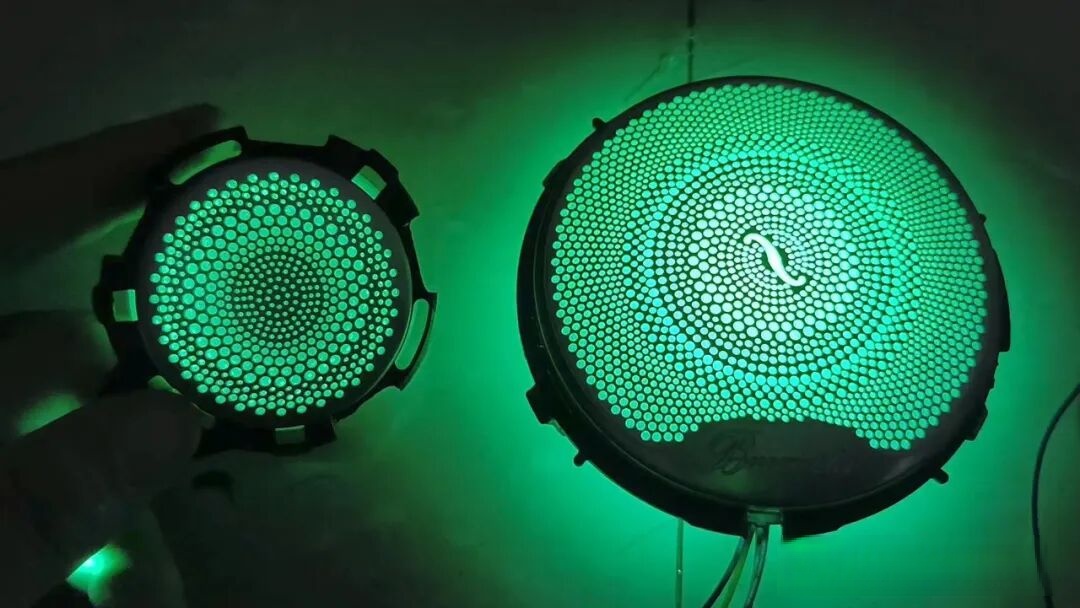
Previously, at a fellow enthusiast’s request, I designed and built a set of illuminated tweeter grille covers for the rear doors of a Mercedes-Benz — documented in “Mercedes Rear Door Illuminated Tweeter Grille — DIY Build Guide.” The first batch was delivered as promised, and no follow-up was published — after all, this is a niche, low-volume DIY accessory.
But recently, another E-Class owner reached out with two clear requirements:
- Vehicle-specific fitment — precisely tailored to the W213 E-Class rear door geometry;
- Improved light uniformity, specifically eliminating the harsh overexposure (blown-out white hotspot) visible in the lower portion of the original design:
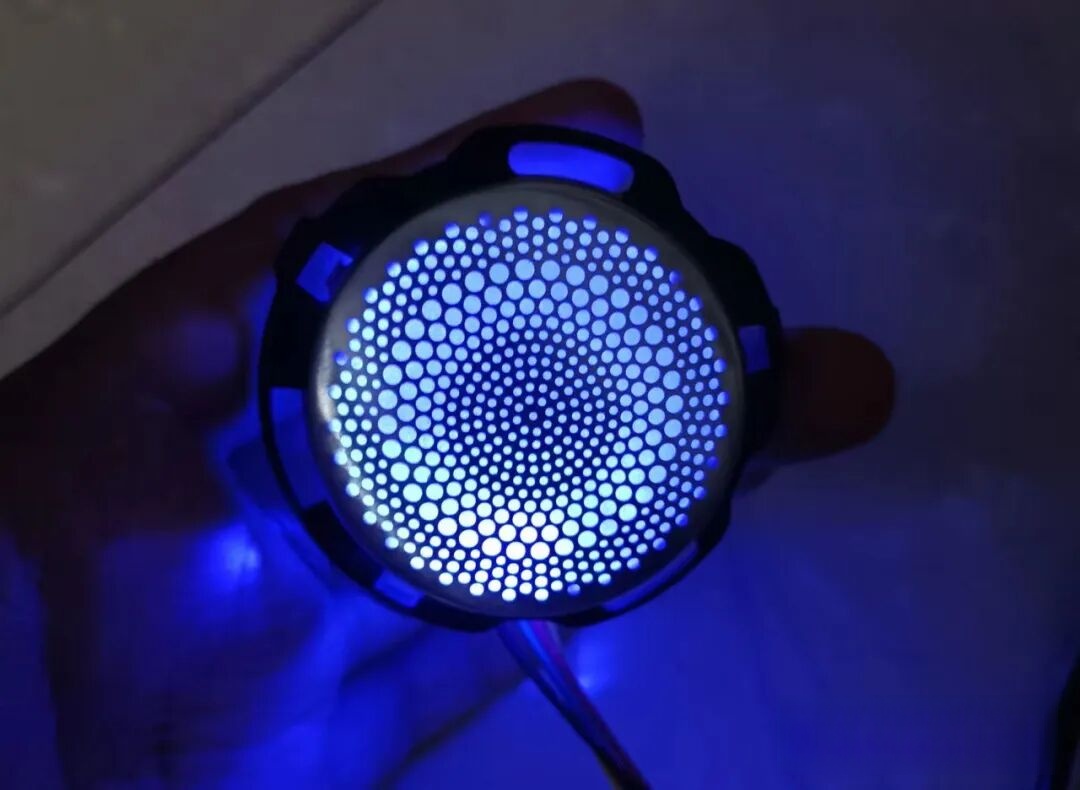
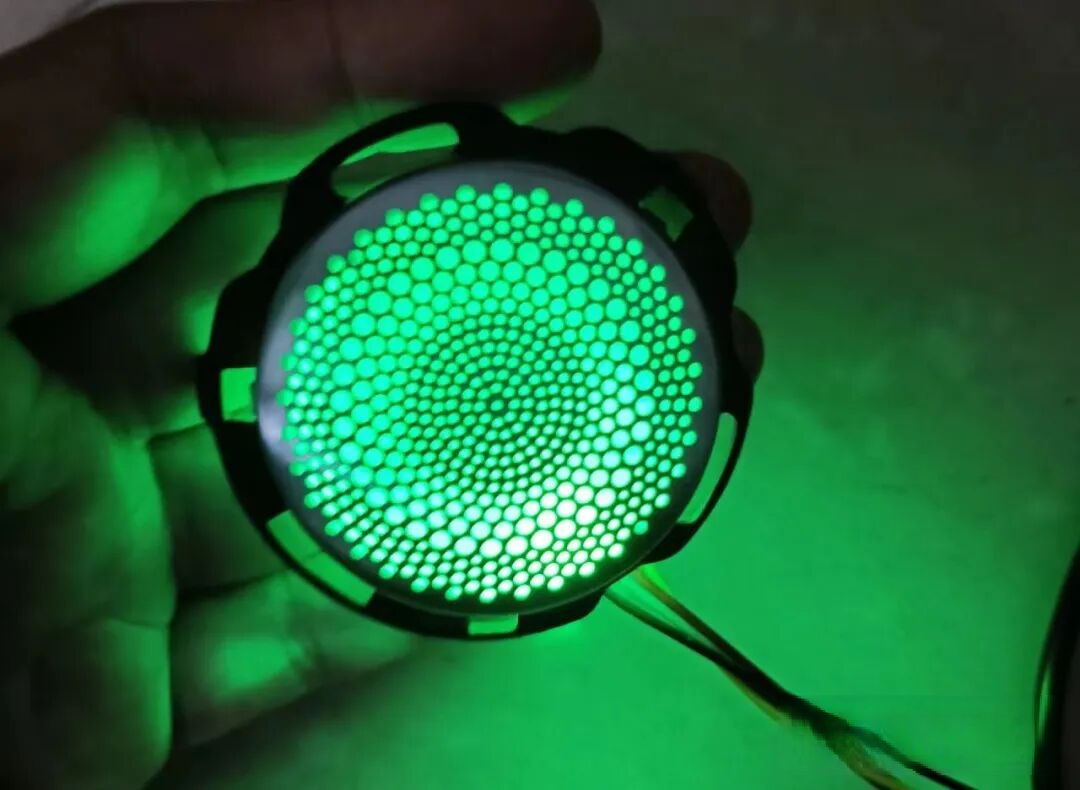
Why Overexposure Happened
Light follows the inverse-square law: intensity drops rapidly with distance. In the first iteration, time pressure (a 3-day turnaround) led to an integrated design — the LED board was mounted directly onto the single-sided light guide bracket. This saved design time and reduced assembly complexity, but placed the LEDs too close to the light guide surface, causing localized saturation and uneven diffusion.
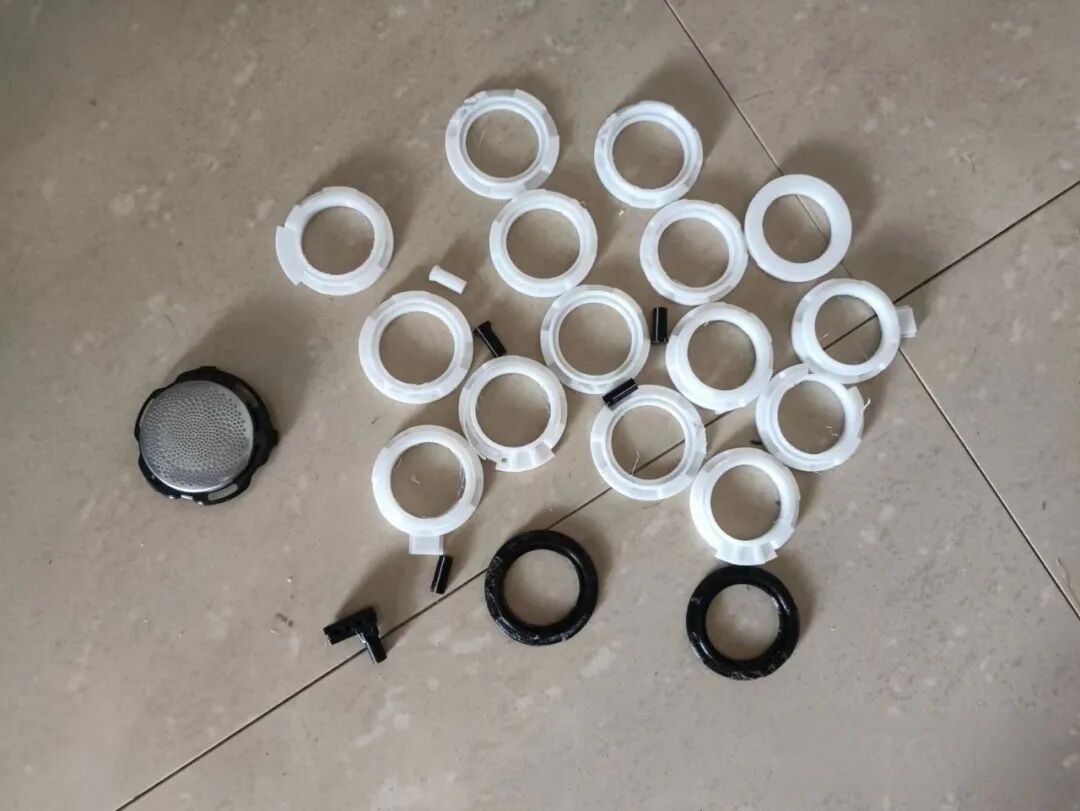
Two Days of Iteration — Not Just “Tweaking”
This round wasn’t just minor adjustment — it involved systematic prototyping and optical testing. Below is just one-quarter of the failed test samples we discarded during optimization:
Key Improvements in V2
Modular LED interface: No more soldering or disassembling the LED board. We introduced a custom plug-in connector that accepts the OEM ambient light head unit directly — no adapters or rewiring required.
Universal compatibility: Works natively with:
- Factory Mercedes LIN-bus ambient lighting modules
- Aftermarket RGB controllers (5050/WS2812B-compatible)
- Standard 12V constant-voltage LED drivers
Service-friendly design: If LED output degrades over time (typical after ~3–5 years), only the light head needs replacement — the light guide plate, bracket, and trim remain untouched.